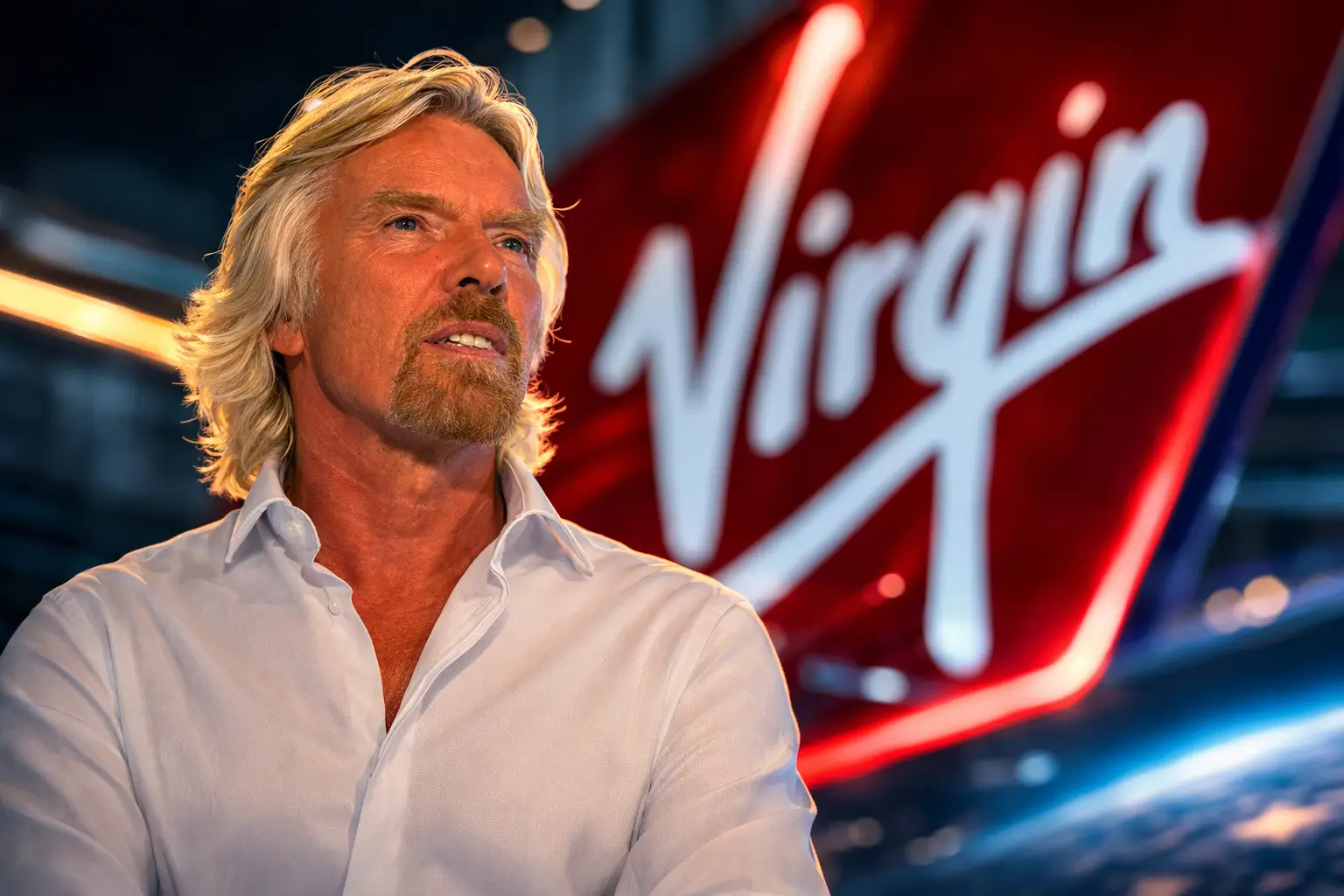
Richard Branson
Richard Branson is widely known today as the founder of the Virgin Group, a global business empire that has operated in industries ranging from airlines to telecommunications.
But long before becoming a billionaire entrepreneur, Branson faced multiple failures and setbacks that shaped his unconventional approach to business.
Understanding those early experiences reveals valuable lessons for small business owners and entrepreneurs navigating uncertain markets.
Richard Branson
https://www.virgin.com/branson-family/richard-branson

The First Business: A Magazine With No Business Experience
In 1968, at just sixteen years old, Branson launched a youth culture magazine called Student.
He had no formal business training and struggled academically due to dyslexia. Despite these challenges, he believed the magazine could become a platform for student voices.
To fund the project, Branson used an unusual strategy: he convinced companies to buy advertising before the magazine even existed.
This early experience taught him a critical entrepreneurial principle: momentum often matters more than perfect planning.
The magazine eventually gained attention and featured interviews with influential figures, including musician Mick Jagger.
Mick Jagger
https://www.rollingstones.com
Although the magazine later shut down, it helped Branson learn how to negotiate, sell ideas, and build networks.
The Mail-Order Record Business That Changed Everything
While running Student magazine, Branson noticed that music records were significantly cheaper when sold through mail order than in traditional retail stores.
He quickly pivoted and launched a mail-order record company that allowed customers to buy music at lower prices.
This venture became the foundation of Virgin Records, which would eventually grow into one of the most influential music labels of the 1970s and 1980s.
Virgin Records
https://www.virgin.com/about-virgin/latest/virgin-records
The lesson here was simple but powerful: successful entrepreneurs often identify inefficiencies in existing markets and build businesses around solving them.
Turning a Small Record Store Into a Global Brand
Branson later opened a physical record store in London. The shop was designed to feel relaxed and welcoming, allowing customers to listen to music before buying.
This experience-focused approach was unusual at the time, when most retail stores followed rigid sales formats.
Eventually, the Virgin brand expanded into record production, signing artists who struggled to find support from traditional labels.
One of the most famous examples was the British band Sex Pistols, whose controversial image initially scared many record companies.
Sex Pistols
https://www.rollingstone.com/music/music-lists/sex-pistols-essential-songs-1299308/
Virgin Records took the risk — and the decision proved extremely profitable.
The Risk That Built Virgin Atlantic
In the early 1980s, Branson decided to enter an entirely new industry: aviation.
The idea began almost accidentally. While waiting for a delayed flight to the Caribbean, he chartered a plane and sold seats to fellow passengers.
This spontaneous decision sparked the idea for Virgin Atlantic Airways, which launched in 1984.
Virgin Atlantic
https://www.virginatlantic.com
Entering the airline industry was considered extremely risky, especially for someone without aviation experience. However, Branson focused on improving the passenger experience, offering better service and entertainment than competitors.
This customer-focused differentiation helped the airline compete with established carriers.
The Entrepreneurial Philosophy Behind Virgin
Branson’s leadership style differs significantly from traditional corporate management.
Instead of focusing on rigid hierarchies, he emphasizes creativity, employee empowerment, and brand personality.
Over time, the Virgin Group expanded into dozens of industries including telecommunications, travel, and finance.
Virgin Group
https://www.virgin.com
Today the Virgin brand has launched more than 400 companies worldwide, demonstrating the power of a strong brand identity combined with entrepreneurial experimentation.
What Small Business Owners Can Learn From Richard Branson
Although Branson built a global business empire, many of his lessons remain relevant for small businesses.
Entrepreneurs studying his career often highlight several key principles:
Start before you feel fully ready
Many successful ventures begin with imperfect planning but strong execution.
Identify inefficiencies in existing markets
Branson’s first major success came from noticing pricing problems in the music industry.
Focus on customer experience
Virgin consistently differentiated itself by improving how customers interact with services.
Take calculated risks
Some of Virgin’s biggest successes began as unconventional experiments.
Build a memorable brand
Even small businesses benefit from having a clear identity and personality.
Why Entrepreneur Stories Still Matter
Stories like Richard Branson’s remain powerful because they show how businesses evolve through experimentation, mistakes, and persistence.
For entrepreneurs, these narratives provide something more valuable than theory: real examples of decision-making under uncertainty.
While not every entrepreneur will build a global brand, understanding the thinking behind successful founders can help small business owners make more informed strategic choices.
Why Visibility Determines Immigrant Business Success in the U.S.